
Residents of Lorneville and Saint John, New Brunswick, are pushing back against the building of a new AI data centre but have been coming across obstacles, including from their local officials.
Beacon Data Centers and Voltagrid are proposing the construction of an artificial intelligence data centre with an onsite gas burning power plant in Lorneville. Lorneville is a coastal community that forms part of the City of Saint John. It has around 800 residents.
Many Lorneville residents are opposed to the expansion and rezoning of the Spruce Lake Industrial Park for the data centre. They have created a campaign called “Save Lorneville” to resist the heavy industrial development in their backyard.
In 2024, a resident of Lorneville submitted a petition to city councillors with 4000 signatures to halt the expansion and rezoning of the industrial park. According to some sources, 98% of the residents of Lorneville signed the petition.
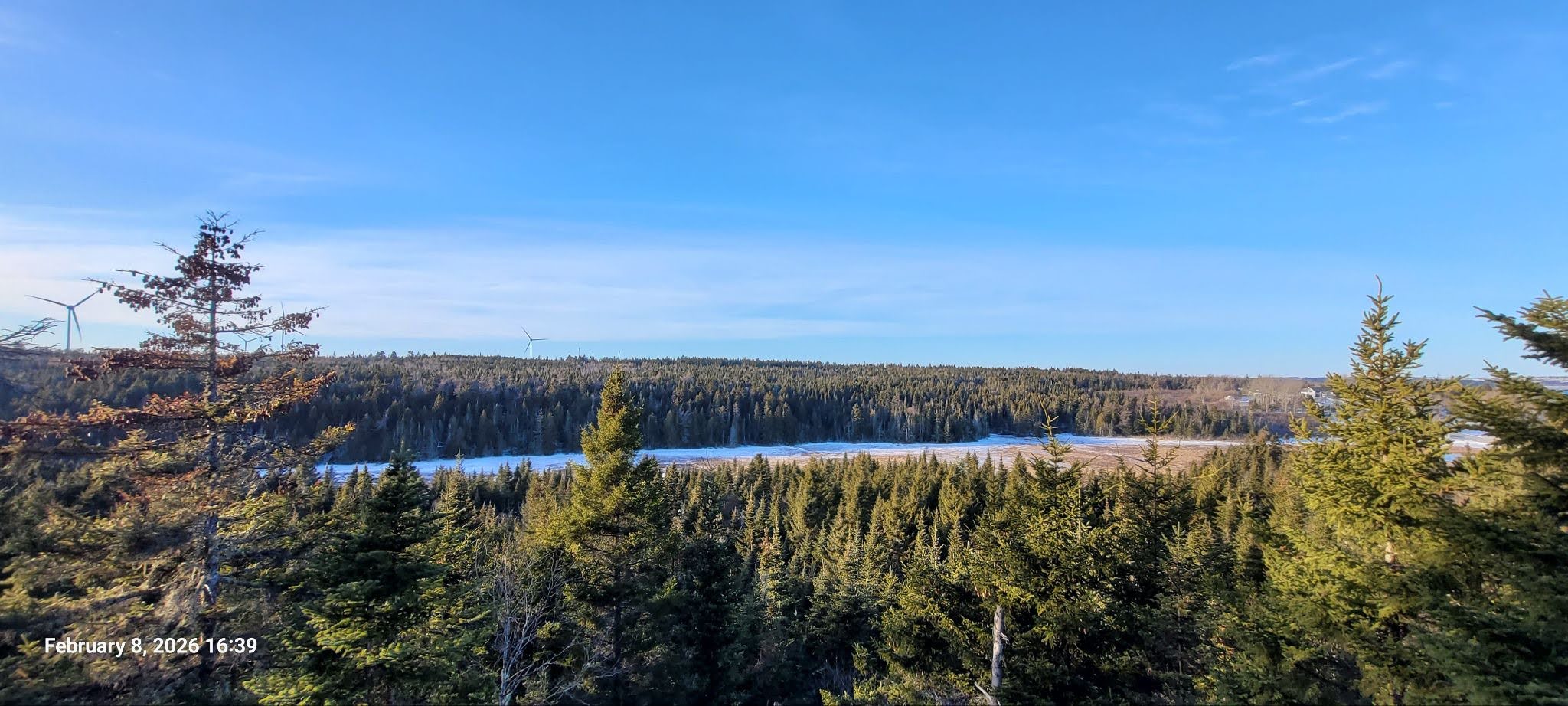
Residents are also worried about noise and light pollution, electronic waste, water and well contamination. These impacts have been documented by U.S. communities near AI data centres. Many oppose the destruction of local wetlands, peatland and old-growth forest in the area. The project would dramatically alter over 1,500 acres in their vicinity for generations.
Despite widespread opposition from residents, the conversion was approved unanimously by the City Council of Saint John in June 2025 including councillors Greg Norton and Joanna Killen, who represent the impacted wards.
In response, the Save Lorneville community group presented a new petition to their MLA, Ian Lee, who read it to the provincial legislature in March 2025. The group also applied for judicial review to challenge the rezoning. That hearing is scheduled for September.
Environmental impact
Voltagrid, a fossil fuel startup based in Texas, would be in charge of building the proposed gas plant and modular generators. With a 190-megawatt capacity, it would narrowly escape a Federal Impact Assessment, since the threshold to oblige is 200 megawatts.
The new plant, however, would supply only a fraction of the electricity required by the energy-guzzling AI data centre. NB Power would therefore need to provide additional electricity, which could increase monthly bills in the area and the province. This effect has been extensively documented across the United States where such projects are built and the energy costs transferred to residents.
The controversial plan for a different 500-megawatt diesel and gas plant in Tantramar, New Brunswick, has been linked to the hulking demands of this new AI data centre. AI data centres strain energy grids far more than regular data centres, and they are driving an increase in reliance on fossil fuel. A query made through an AI virtual assistant or chatbot like ChatGPT or Claude uses 10 times the electricity of a regular browser search.
331 doctors from Moncton’s Dr. Georges-L.-Dumont University Hospital Centre wrote a letter opposing the Tantramar project. The letter raises concerns about greenhouse gas emissions, which are associated with cardiovascular and respiratory diseases, cancers and congenital conditions.
In a 2025 technical review for a facility in Shackelford County, Texas, Voltagrid forecast that emissions from its gas generators would contain sulfur, carbon monoxide, nitrogen oxide, formaldehyde and other hazardous air pollutants. Voltagrid also provided 14 mobile generators to Elon Musk’s controversial xAI Colossus Data Center in Memphis, Tennessee, which faces a NAACP lawsuit over air pollution.
It is estimated that the gas-burning power plant in Lorneville would emit roughly 755,000 tonnes of greenhouse gases per year, equivalent to about 6.6% of New Brunswick’s total 2023 emissions. It would be one of the province’s largest emitters.
Though the city of Saint John has mandated a 150-metre buffer zone between homes and the location of the heavy industrial development, the burning of fossil fuel would contaminate the air in the immediate proximity of residents of Lorneville and beyond.
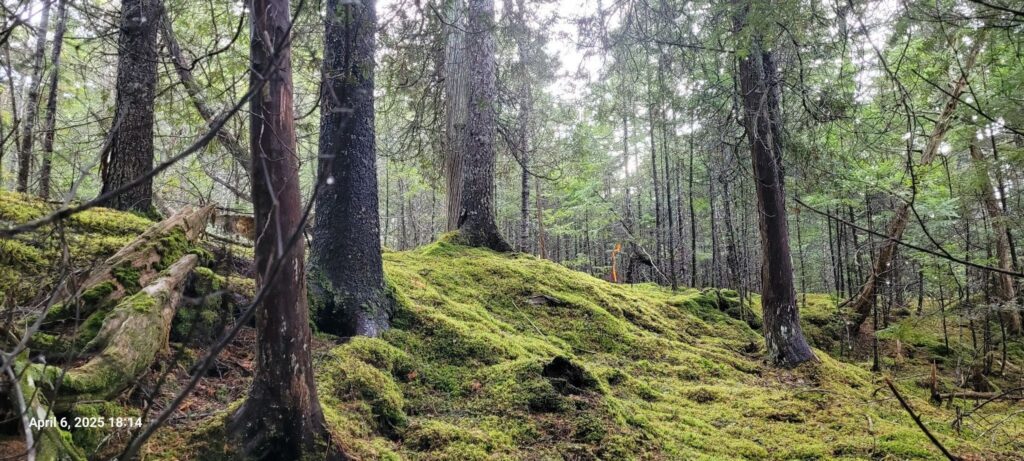
The province rushed a 2024 Environmental Impact Assessment (EIA) registered for one zone of the proposed development. However, it omitted the existence of several waterways and an old-growth forest including a 408-year-old tree, as documented by physicist Christopher Watson of Save Lorneville.
Watson says that no ground water assessment, surface water assessment or cumulative effects assessment was made for this EIA.
On March 26, the provincial legislature voted overwhelmingly against a law which would have created an environmental rights registry. Only two MLAs, Megan Mitton and David Coon, voted in favour of the measure. It also included measures that would have empowered New Brunswickers to pursue investigations and legal action against those that destroy their environment.
Meanwhile, a storm of laws and agreements, both federal and provincial, is being introduced to weaken environmental protections for the fossil fuel and AI industries. At the federal level, these include bills C-5 and C-15, which give the government sweeping powers to shut out public participation and bypass environmental laws, Indigenous peoples’ rights and legal safeguards.
At the provincial level, Premier Susan Holt made an agreement with the federal government in December 2025 that would accelerate EIAs by reducing federal oversight.
The U.S. has over 4,000 data centres, and there is ample evidence of their destructive impact on the environment and public health. In 2025, data centres in North America consumed nearly 1 trillion litres of water, according to market research firm Mordor Intelligence.
Data centres cause more carbon emissions than many small countries combined. A 2024 study found that 2,132 U.S. data centres emitted 105 million metric tons of carbon emissions, up from 31.5 million tons in 2018. They produce electronic waste with lead, mercury and PFAS leaching into ecosystems. Neighbours report soaring power bills, breathing difficulties from air pollution, insomnia from incessant hums, heat islands, cancer and water scarcity.
Prime Minister Mark Carney has been lobbied extensively by natural resource interests and power generation companies like Capital Power to repeal emissions regulations and environmental protections.
Carney himself has considerable holdings in Brookfield Asset Management, which announced in November 2025 an investment of $100 billion in a program to build AI Infrastructure.
1 Commentaire
[…] Vancouver data centres are not the only ones receiving significant pushback from local communities. Residents of Lorneville and Saint John, New Brunswick have been fighting against the proposals to establish data centres in the region since 2024. The […]
Joignez-vous à la discussion!
Les commentaires sont réservés aux abonnés. Abonnez-vous à L’Étoile du Nord pour discuter sous nos articles avec nos journalistes et les membres de la communauté. Si vous êtes déjà abonné, connectez-vous.